

In our recent post about productive struggle (access here), we discussed what makes a task cognitively complex, noting that cognitive complexity is the amount and type of thinking a math task asks students to do....

Centipede’s 100 Shoes In a recent post (access it here), we talked about how children’s literature can be an effective way to provide interesting contexts for math problems. In Tony Ross’ Centipede’s 100 Shoes (2002),...

Have you ever wondered how many dimples a golf ball has (a golf ball’s dimples are the little indentions you see all around the ball’s surface area)? Probably not, and neither had I until my...

Imagine a discussion during math class. The teacher poses a problem; the class solves it mentally and shares their thinking with a partner. During the discussion that follows, a student offers an incorrect answer, and...
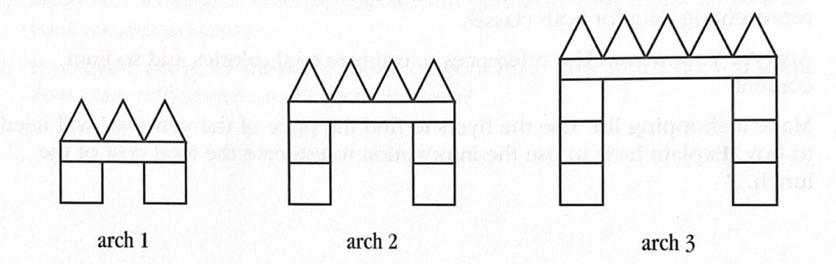
On a recent weekend, I was working on a math problem with a friend of mine. The problem included several different questions, beginning with asking us what we noticed and wondered about the following arch...

Have you ever wondered if some letters in our alphabet are used more or less than other letters? Think for a few seconds, and make a guess. If you wanted to find out, what would...
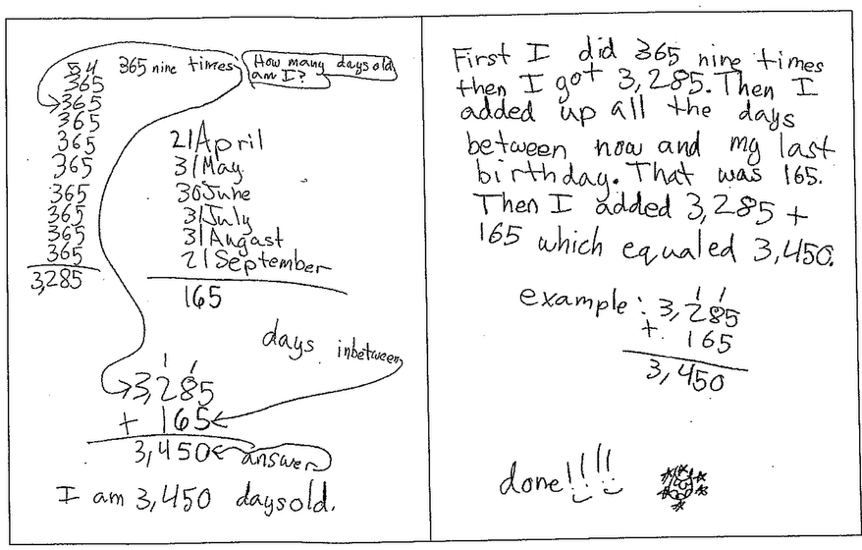
Why use children’s literature in math class? This isn’t a new question, and I’m glad that teachers have come to see the value in reading a story to either launch or summarize a math lesson....

Do you remember your teacher in grade school telling you to “always start adding in the one’s place”? It seemed like a rule that you had to follow, whether it made sense to you or...
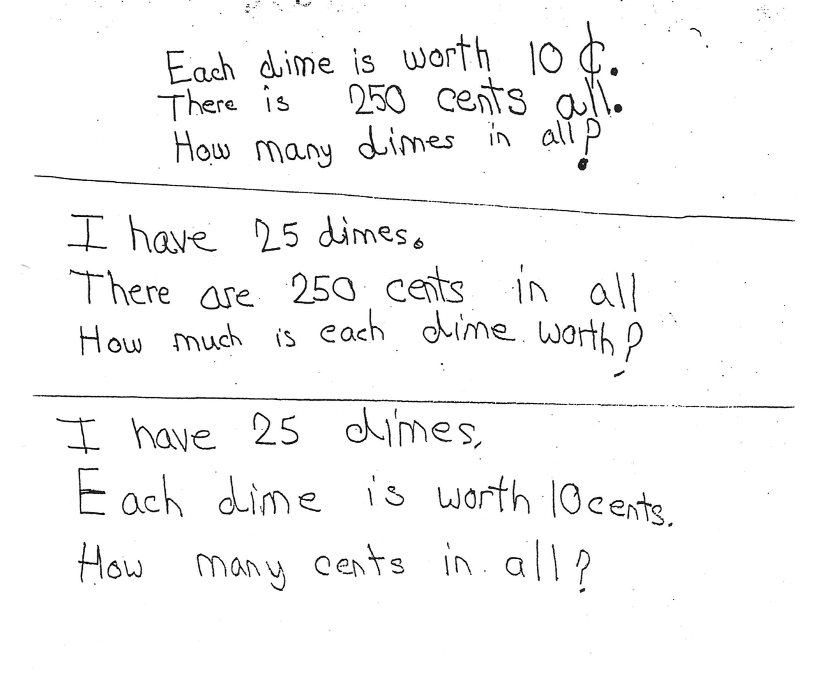
Why pose ready-made word problems for students to solve when they can create and then solve ones themselves? Having students create their own math word problems shifts them from passive calculators to active mathematical thinkers....
BlogMath Transformations2024-10-23T09:16:28-07:00
